One of my most memorable experiences in Zambia was a bicycle tour as we got away from the tourists and explored some of the local villages, understanding the people, politics and poverty of the ‘real’ Zambia.
Livingstone is lovely area and there are plenty of locals that live in the town centre but it is heavily geared towards tourists. Without venturing further afield, you don’t realise that even the Africans that live there are the economic elite and there is another Zambia where the vast majority of people live.
The contrast could not be starker.
It was this urge to make sure we understood the realities of people’s lives that led me and my new Belgian friend Antoinne to undertake a bicycle tour around Livingstone.
I was sceptical that we would really understand how people lived as how far out were we really going to get of the city centre in a leisurely cycle ride?
What you don’t realise is that Livingstone has an invisible line that tourist’s never cross and within 5km of leaving the city centre everything changed.
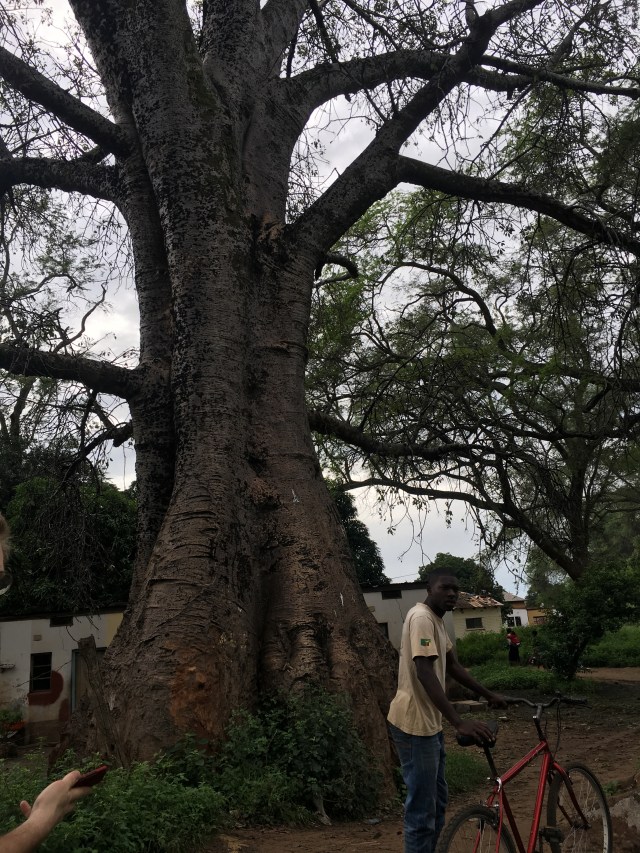 We stopped at a large tree in the Linda suburb which many locals believe has special healing powers and so is used as a treatment for a variety of ailments. Many residents in the village shun modern medicine and rely on witch doctors and alternative forms of medicine thus tragically exacerbating health inequalities.
Of course such ignorance arises not out of stupidity on their part, but due to shockingly low levels of funding for education and a low provision of health care that means even if people wished to go to a hospital, going would be out with their means.
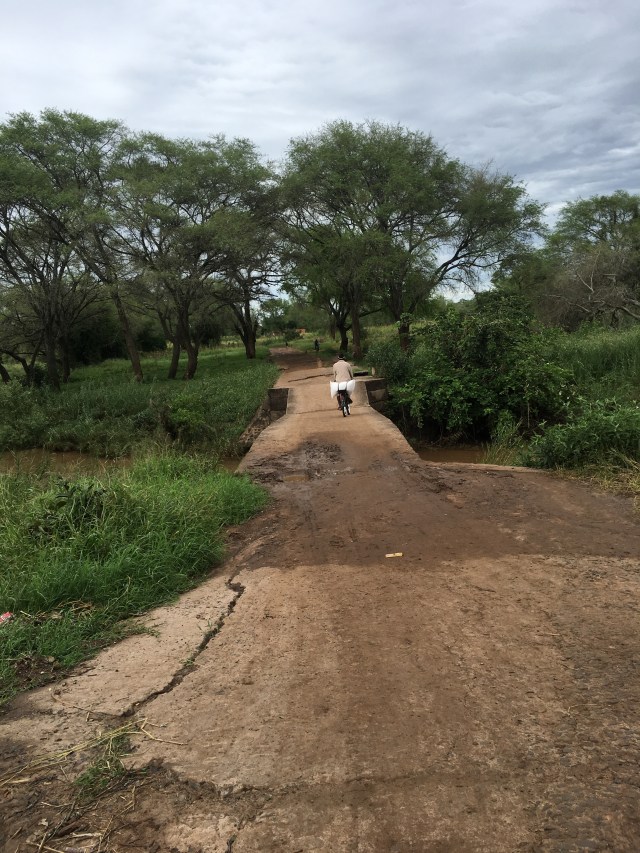
As we left the main road, I started to feel my calves hurting from negotiating narrow, bumpy dirt roads on our rickety mountain bikes which may as well have had jelly instead of a suspension!
Just as I started to feel quite sorry for myself I saw a boy who can’t have been older than 10 on an even older bike negotiate the same road whilst carrying 2 large sacks of Maize on his head to give me a sense of perspective!
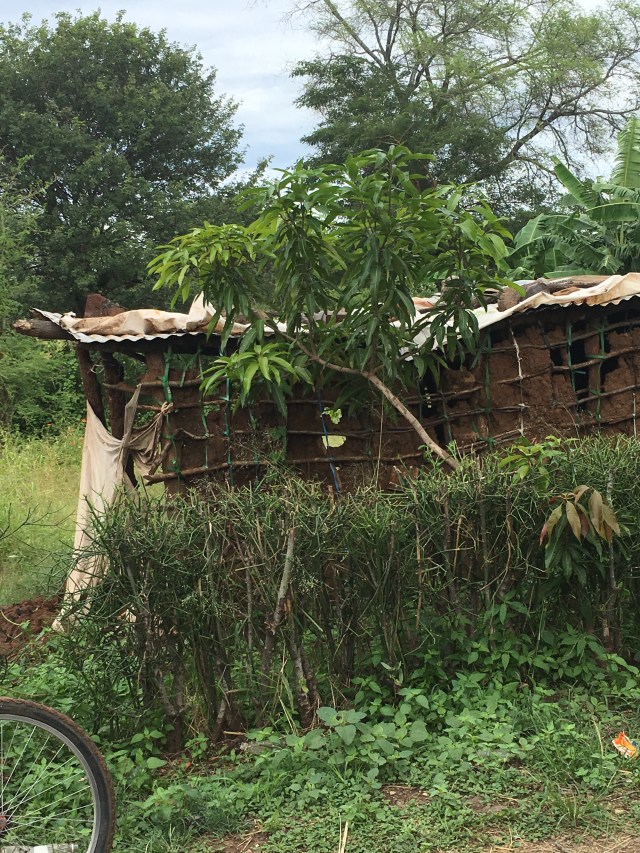
 We passed some mud huts on our way into the village that typically only had 3 walls and often with just some branches and leaves for a roof. Our tour guide explained that whilst awaiting permission to build a property their only option was to construct their own huts for accommodation. These had no running water or electricity and was of course completely exposed to the elements.
The process of planning permission in these villages is fascinating. The government appears to have no jurisdiction in practice and instead anyone who wished to live in the village has to seke permission from the village chief who will assess their worthiness based on their links to the village, morals and how devoutly religious they are.
The chief is a hereditary position and what gives him the gift to be able to peer into everyone’s souls to judge their moral worth is apparently a moot point!
Having been in Zimbabwe and South Africa that are both undergoing traumatic changes in government what is interesting about these villages is that the people seem to genuinely accept and revere the system of local chiefs with no yearning for a more democratic system.
 Not that the system of only being able to build a house in London if you are a millionaire can be described as democratic!
Even the completed houses often have no electricity and cooking is almost all done over an open fire near the farm where most people work. Adults will sleep 4 to a room and typically at least 3 families have to live together in these cramped conditions.
We then cycled to a stone quarry where most people work in the dry season once they have harvested their crops.
It’s hard to articulate just how tragic a sight this is. Exhausted workers break down rocks (often by hand) in the sweltering heat all day in order to sell the smaller rocks to local builders at the market. The most productive workers who have shovels make around $1 a day; the rest make far less.
The money is so bad that when there is a small period of drought leading to a bad harvest as there was this year it is a real challenge to make enough money to eat and that’s why there were children as young as 5 working all day at the quarry to support the family.
Education is not free in Zambia and these children cannot even get close to being able to afford school, so this will be their future. Watching them imitate their father in the knowledge that it is all they have due to the cruel lottery of life is tragic beyond belief.
We then cycled to a school that the tour company sponsors. Whilst not free it is heavily subsidised by donations meaning that at least a small percentage of children in the village can gain an education.
As ever, the innocence and joy of the children was a pleasure to witness and I’ve done nothing more enjoyable than interacting with children on my travels and try to make them feel important.
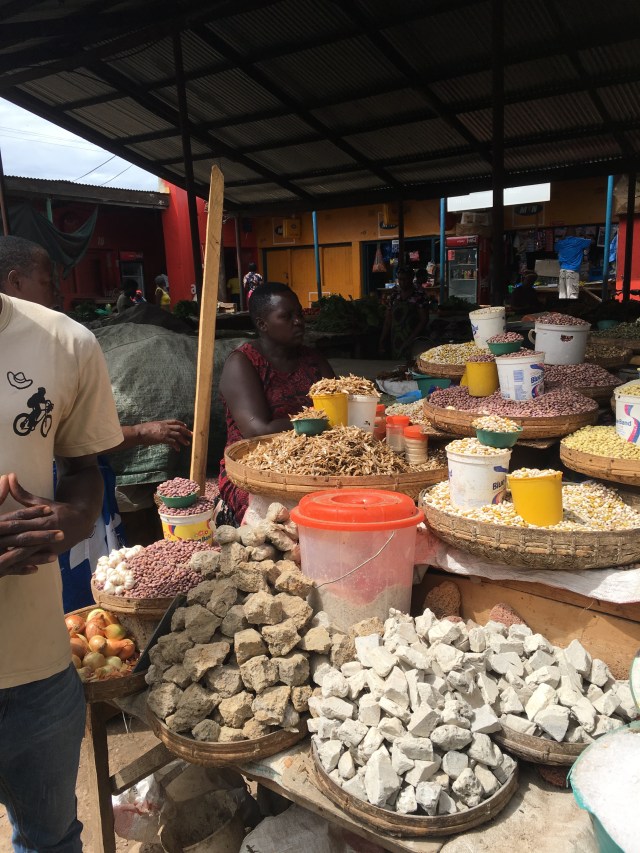
Our final stop was at a bustling market where farmers sell their produce. It is the only market in the vicinity and many vendors travel up to 6 hours by bike to get there, starting their voyage at midnight, a journey they undertake every single day.
 This sounds like a dreary and depressing tour but that belies the vibrancy, colours and good humour of the people we met. And yet it was important to understand the realities of life for Zambians.
It’s often stated that Zambia has low crime but one of the villagers explained that he had been assaulted recently and the police didn’t even record it as it is only crimes against tourists that are taken seriously and so even this is a veneer.
The enthusiasm and bonhomie of Zambian people means they never talk about this side of their country and only want visitors to have a joyful time yet it is crucial to understand the realities.
Part of me is loath to write posts like this as I really want to inspire more people to come to this incredible continent and understand that there is so much more to Africa than media stereotypes and yet I think it’s crucial to understand the poverty that exists and the realities of people’s lives.
 YoYo in Colour